
Learning and Curriculum
Learning and Curriculum
An ambitious Secondary curriculum that helps pupils build strong knowledge, confidence and independence from Year 7 to Year 11.
At Trinity Secondary, our curriculum helps pupils build strong knowledge, confidence and independence from Year 7 to Year 11. Pupils study a broad range of subjects, with learning carefully sequenced so that knowledge, skills and understanding grow over time.
Our curriculum information gives families a clear overview of what pupils study in each year group and subject. It shows how pupils move from strong foundations in Year 7, through increasing independence in Key Stage 3, into GCSE courses and preparation for future pathways.
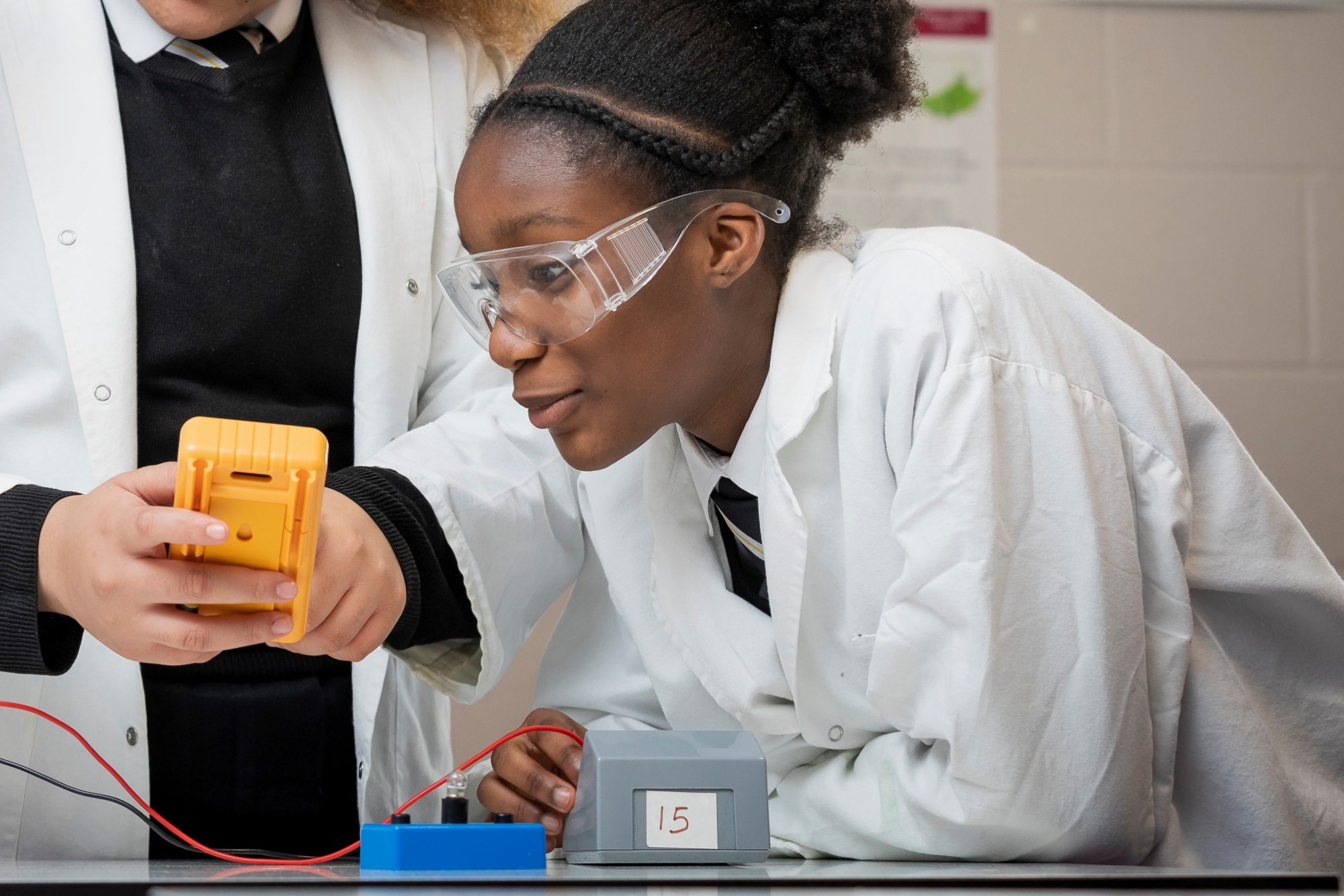
Learning that builds over time: pupils develop subject knowledge, vocabulary, confidence and independence as they move through Secondary school.
How to use this page
The information below sets out the content of the curriculum by year group and subject. Some subjects in Years 9, 10 and 11 are part of option or pathway provision, so not every pupil will study every subject listed.
Parents and carers have the right to withdraw their child from all or part of Religious Education. To discuss this, please contact the school office.
For more information about a subject curriculum, please contact the school office and your enquiry will be directed to the relevant curriculum leader.
Key Stage 4 courses
At Key Stage 4, pupils study a core curriculum and a range of GCSE and pathway subjects. The subjects listed below are included in the curriculum information for Years 10 and 11.
| Curriculum area | Courses and subjects |
|---|---|
| Core curriculum | English, Mathematics, Science, Religious Education and Core Physical Education |
| Humanities and languages | Geography, History, French and Spanish |
| Creative, practical and technical subjects | Art, Drama, Engineering, Food Preparation and Nutrition, Computer Science, iMedia, Music and Music Technology |
| Physical education and sport pathways | GCSE Physical Education and Sport Studies |
| Additional pathway subjects | Business Studies, Statistics and Citizenship |
Curriculum by year group
Year 7, building strong foundations
Year 7 helps pupils make a confident start to Secondary learning. Pupils study a broad curriculum across core, creative, practical, physical, humanities, languages and religious education subjects. Learning builds on primary knowledge while introducing pupils to specialist teaching, subject vocabulary, independent learning and the habits needed for future GCSE study.
English
In Year 7 English, pupils develop reading, writing, speaking and analytical skills through a varied study of literature and non fiction.
Michaelmas: Pupils study Animal Farm by George Orwell, exploring power, greed and society. They then study Shakespearean rhetoric, learning how writers and speakers use language to persuade.
Lent: Pupils read poems from different cultures, exploring identity, oppression and historical context. They also study non fiction speech writing, developing confidence in writing and delivering persuasive speeches.
Trinity: Pupils read and write short stories, developing language, tone, structure and creativity. They then study Antigone, exploring justice, fate, family loyalty and ancient literature.
Mathematics
In Year 7 Mathematics, pupils strengthen number, algebra, geometry and reasoning skills.
Michaelmas: Pupils develop algebraic thinking through sequences, algebraic notation, equality and equivalence. They then study place value, ordering, fractions, decimals and percentages.
Lent: Pupils apply number through addition, subtraction, multiplication, division, fractions and percentages. They also develop understanding of directed number and fractions.
Trinity: Pupils study lines, angles, geometric notation and reasoning. They then develop number sense, probability, prime numbers and proof.
Science
In Year 7 Science, pupils build secure foundations across biology, chemistry and physics.
Michaelmas: Pupils are introduced to laboratory safety, Bunsen burners, hazard symbols, cells, microscopes, atoms, elements, energy transfer, body systems, acids and alkalis.
Lent: Pupils study light, reproduction, sound, hearing, habitats, food chains, food webs and relationships between organisms.
Trinity: Pupils learn about the periodic table, forces and the structure and function of plants.
History
In Year 7 History, pupils study key periods in British and wider history while developing historical skills such as causation, significance, interpretation, change and continuity.
Michaelmas: Pupils study pre 1066 England, the Norman Conquest and the Medieval Church.
Lent: Pupils explore Medieval society, the Black Death, Magna Carta and religious change in Tudor England.
Trinity: Pupils study the Stuarts, the English Civil War and the British Empire, including how the Empire should be remembered.
Geography
In Year 7 Geography, pupils study places, physical processes, human development and environmental challenges across different continents.
Michaelmas: Pupils study Brazil and tropical rainforests, then tectonic hazards in China and Japan.
Lent: Pupils study rivers and flooding in North America, then development challenges in West Africa, including Lagos, rural poverty and development projects.
Trinity: Pupils study the impact of the Ice Age on the UK, then Russia, biomes, energy and future challenges.
Religious Education
In Year 7 Religious Education, pupils explore Christian theology, worldviews, philosophy and world religions.
Michaelmas: Pupils study truth, worldviews and tolerance, then explore Old Testament and New Testament Christian theology.
Lent: Pupils learn about Church history, women of faith and the relationship between religion and science.
Trinity: Pupils study Hinduism and Buddhism, including core beliefs, practices, history and teachings.
French and Spanish
In Year 7, pupils study both French and Spanish. They build confidence in speaking, listening, reading, writing, translation and dictation.
Michaelmas: Pupils begin in French, learning classroom language, feelings, names, family vocabulary, age, numbers, months and future tense structures.
Lent: Pupils study Spanish, learning classroom language, feelings, names, family vocabulary, age, numbers, months, birthdays and future tense structures.
Trinity: Pupils return to French, developing descriptions of personality, appearance, opinions and extended answers.
Physical Education
In Year 7 Physical Education, pupils develop fitness, teamwork, communication, technique and confidence across a range of activities.
Michaelmas: Pupils complete baseline fitness testing and study football and rugby.
Lent: Pupils develop skills in gymnastics, table tennis, badminton and netball.
Trinity: Pupils study rounders, cricket and athletics, including track and field events.
Music
In Year 7 Music, pupils develop performance, composition, listening, notation and ensemble skills.
Michaelmas: Pupils study rhythm and pulse, then explore world rhythms, loops and layers through music such as Gamelan, Samba and African song.
Lent: Pupils are introduced to keyboard and ukulele, then study sonority across film, rock, pop and classical music.
Trinity: Pupils explore chromatic, major and minor scales, perform melodies and compose using different musical moods and styles.
Drama
In Year 7 Drama, pupils develop performance, characterisation, theatre analysis and confidence.
Michaelmas: Pupils learn foundation drama skills, including voice, movement, gesture, facial expression, freeze frame, improvisation, mime, narration and staging.
Lent: Pupils perform from scripts, developing vocal and movement skills, staging knowledge and live performance confidence.
Trinity: Pupils analyse theatre, technical design and performance skills, then revise key drama knowledge and skills.
Art
In Year 7 Art, pupils develop observation, drawing, analysis, colour theory and practical art skills.
Michaelmas: Pupils study the foundations of art, including observational drawing, colour theory, optical illusion and artist analysis.
Lent and Trinity: Pupils study Ndebele artwork, colour, pattern, symmetry and the work of Esther Mahlangu. They plan, refine and complete a final outcome.
Food
In Year 7 Food, pupils develop practical cooking skills, food safety knowledge and understanding of healthy eating.
Michaelmas: Pupils are introduced to food safety, hygiene, knife skills, kitchen equipment, grilling, oven skills, breakfast and evaluating food.
Lent and Trinity: Pupils study eating well, the Eatwell Guide, nutrition, dairy foods, staple foods, protein, allergy awareness and food tasting.
Engineering
In Year 7 Engineering, pupils develop design, workshop, material and evaluation skills.
Michaelmas: Pupils are introduced to polymers, workshop health and safety, tools, equipment, material properties, manufacturing processes and the design process.
Lent and Trinity: Pupils develop understanding of polymers through Bauhaus inspired design, producing a clock face design and final product, then evaluating their work.
Computing
In Year 7 Computing, pupils develop digital safety, computer science and programming knowledge.
Michaelmas: Pupils study online safety, wellbeing, bullying, computer systems, hardware, binary and data representation.
Lent: Pupils learn HTML and CSS to create a basic website, then develop spreadsheet skills.
Trinity: Pupils study databases and SQL, then algorithms, flowcharts, pseudocode and Python programming.
Year 8, deepening knowledge and confidence
Year 8 helps pupils deepen the knowledge, skills and confidence developed in Year 7. Pupils continue to study a broad curriculum across core, creative, practical, physical, humanities, languages and religious education subjects. Learning becomes more demanding as pupils develop stronger subject vocabulary, independence, analysis, problem solving and confidence in applying what they know.
English
In Year 8 English, pupils develop analytical writing, comparison, creative writing, rhetoric and non fiction writing through poetry, novels, drama and travel writing.
Michaelmas: Pupils study Romantic Poetry, exploring poets such as William Blake and William Wordsworth, alongside themes including industrialisation, religion and nature. They then study Julius Caesar, developing understanding of Shakespearean language, rhetoric and dramatic speeches.
Lent: Pupils read Lord of the Flies by William Golding, exploring morality, ethics, vocabulary and analytical writing. They also study dystopian fiction, including short stories and extracts from novels such as 1984.
Trinity: Pupils study The Crucible by Arthur Miller, exploring allegory, paranoia, evil and honour. They then study non fiction travel writing, developing writing skills to inform and persuade.
Mathematics
In Year 8 Mathematics, pupils build fluency and reasoning across number, algebra, geometry, probability and data.
Michaelmas: Pupils study proportional reasoning, ratio, scale, multiplicative change, multiplying and dividing fractions, and working in the Cartesian plane. They also study data representation, tables and probability.
Lent: Pupils develop algebraic techniques, including brackets, equations, inequalities, sequences and indices. They also study fractions, decimals, percentages, standard index form and number sense.
Trinity: Pupils study geometry, including angles in parallel lines and polygons, area of trapezia and circles, symmetry and reflection. They then develop reasoning with data, including data handling and measures of location.
Science
In Year 8 Science, pupils deepen their understanding of biology, chemistry and physics through practical and theoretical learning.
Michaelmas: Pupils study plants, photosynthesis, separation techniques, electricity, respiration, pressure, levers and moments.
Lent: Pupils learn about metals and non metals, health and disease, magnetism and inheritance.
Trinity: Pupils study the reactivity series, enzymes, classification, evolution and the rock cycle.
History
In Year 8 History, pupils study significant social, political and global events while developing historical skills such as source analysis, causation, change, continuity and interpretation.
Michaelmas: Pupils study the Transatlantic Slave Trade, including the Middle Passage, plantation life, resistance and abolition. They then study the Civil Rights Movement in the USA.
Lent: Pupils study the Industrial Revolution, including public health, factory conditions and social change. They then study the First World War, including causes, trench warfare, propaganda and censorship.
Trinity: Pupils study the Second World War, including the Treaty of Versailles, Hitler, Dunkirk, the Battle of Britain, Pearl Harbour and D Day. They then study the Holocaust, including antisemitism, ghettos, the Final Solution and remembrance.
Geography
In Year 8 Geography, pupils study human and physical geography across different regions, with a focus on coasts, cities, hazards, conflict, climate and environments.
Michaelmas: Pupils study UK coasts, then Mexico and the growth of a megacity.
Lent: Pupils study hurricanes in the USA, then conflict and development issues in Sudan.
Trinity: Pupils study climate change in Bangladesh, then compare deserts in the Middle East with the Russian tundra.
Religious Education
In Year 8 Religious Education, pupils explore philosophy, Judaism, Christianity, moral philosophy, Islam and Sikhism.
Michaelmas: Pupils study philosophy of religion, including arguments for the existence of God, evil and suffering. They then study Judaism, including covenant, worship, festivals and community.
Lent: Pupils study Christianity, including the life and teaching of Jesus, worship, sacraments and resurrection. They then study moral philosophy, including ethical theories and moral decision making.
Trinity: Pupils study Islam, including beliefs, worship and practice. They then study Sikhism, including Guru Nanak, the Gurus, the Guru Granth Sahib, the Gurdwara and Sikh beliefs about life and service.
French
In Year 8 French, pupils build confidence in speaking, listening, reading, writing and translation while developing more secure grammar and vocabulary.
Michaelmas: Pupils study Le monde autour de moi, revising feelings, personality, free time, weather, family descriptions, adjectival agreement, comparatives and opinion phrases.
Lent: Pupils study Mon collège, learning to describe school facilities, subjects, opinions, breaktime and what primary school used to be like.
Trinity: Pupils study La cuisine du monde, learning to discuss food likes and dislikes, past and present eating habits, recent meals and food they would like to try when eating out or travelling.
Spanish
In Year 8 Spanish, pupils develop vocabulary, grammar and confidence in communicating across familiar themes.
Michaelmas: Pupils study holidays, past experiences, phone use, music, films, television and online life, using present and past tense structures.
Lent: Pupils study food, meals, restaurant language, shopping, future plans, social arrangements and daily routines.
Trinity: Pupils study clothes, school uniform, preferences, homes, local places and summer activities, developing use of present, past and future tense structures.
Physical Education
In Year 8 Physical Education, pupils develop technique, teamwork, communication, fitness and confidence across a range of activities.
Michaelmas: Pupils complete baseline fitness testing and develop skills in football and rugby.
Lent: Pupils develop skills in gymnastics, table tennis, badminton and netball.
Trinity: Pupils study rounders, cricket and athletics, including track and field events.
Music
In Year 8 Music, pupils develop instrumental, performance, composition, listening and technology skills.
Michaelmas: Pupils develop band skills through keyboard, ukulele, bass guitar, guitar and group performance. They then study world music through Samba, call and response, percussion and ensemble performance.
Lent: Pupils study Blues, including chords, bass lines, improvisation and blues history. They then explore hooks, riffs, layers, loops, texture and structure.
Trinity: Pupils study variations, using rhythm, texture, pitch, dynamics, speed and tonality. They then study Rock and Roll, developing performance skills through whole class and small group work.
Drama
In Year 8 Drama, pupils develop devising, physical theatre, script performance, theatre analysis and confidence.
Michaelmas: Pupils devise Theatre in Education performances, using drama conventions to communicate meaning and realise artistic intentions. They then study physical theatre, using movement and performance skills to create meaning.
Lent: Pupils perform from scripts, developing their ability to realise artistic intention in live performance. They then analyse technical aspects of theatre and performance skills used in live performance.
Trinity: Pupils study the set text Noughts and Crosses, exploring technical theatre and performance skills. They also revisit devising, script performance and theatre analysis.
Art
In Year 8 Art, pupils develop observational drawing, formal elements, cultural understanding, three dimensional work and evaluation skills.
Michaelmas: Pupils study the formal elements of art, develop observational drawing and analyse the mark making and work of Vincent van Gogh. They complete a final outcome and evaluate their work using key terminology.
Lent and Trinity: Pupils study Jing Ju masks, facial proportions and the relationship between culture and art. They use papier mache to create a three dimensional outcome, refine their own design and evaluate their work.
Food
In Year 8 Food, pupils develop practical cooking skills, food science knowledge, nutrition understanding and food design skills.
Michaelmas: Pupils study diet and health, including gluten, bread, energy balance, digestion, nutrients, their functions and food sources.
Lent and Trinity: Pupils complete a pasta project, developing research skills, food design, maths in food, food science investigation, sauce making, pasta extrusion, labelling and costing.
Engineering
In Year 8 Engineering, pupils develop practical workshop skills, design thinking, material knowledge and product evaluation.
Michaelmas: Pupils are introduced to alloys, workshop health and safety, tools, equipment, material properties, ferrous and non ferrous metals, manufacturing processes and the design process. They design and make a pewter keyring inspired by famous architecture.
Lent and Trinity: Pupils study mechanisms, wood and timber, hard and soft woods, existing products and design development. They create a working marionette puppet, refine their ideas, make a final outcome and evaluate their work.
Computer Science
In Year 8 Computer Science, pupils develop understanding of digital systems, data, programming concepts and the wider impact of technology.
Michaelmas: Pupils learn about networks, cyber security, data and data representation.
Lent: Pupils study machines, computational modelling and database programming.
Trinity: Pupils study web design and development, then explore computing and the environment.
Year 9, growing independence and GCSE readiness
Year 9 helps pupils grow in independence, confidence and readiness for Key Stage 4. Pupils continue to strengthen subject knowledge, develop more precise vocabulary and apply their learning with greater maturity. In many subjects, pupils begin to work with more complex ideas, extended writing, practical projects and GCSE style knowledge and skills.
English
In Year 9 English, pupils develop analytical reading, creative writing, comparison and non fiction skills through poetry, Shakespeare, modern fiction and wider reading.
Michaelmas: Pupils study war poetry and non fiction, exploring different attitudes towards conflict through writers such as Wilfred Owen and Jessie Pope. They then develop narrative writing, focusing on setting, character, action and reaction.
Lent: Pupils study Shakespeare’s Romeo and Juliet, exploring love, conflict, family and character development. They learn to analyse extracts in detail and make links across the wider text.
Trinity: Pupils study The Marrow Thieves, exploring alternative perspectives, identity, conflict and trauma. They then read related non fiction texts to strengthen comprehension, analysis and GCSE readiness.
Mathematics
In Year 9 Mathematics, pupils develop algebraic fluency, proportional reasoning, geometry, data handling and problem solving.
Michaelmas: Pupils study algebraic manipulation, including simplifying expressions, expanding and factorising brackets, solving equations and using formulae. They then develop proportional reasoning through distance, speed and time graphs, currency, ratio, fractions, decimals and percentages.
Lent: Pupils study compound measures, direct and inverse proportion, decimals, directed number, rounding, estimation and indices. They also solve equations, inequalities, graphs and problem solving tasks.
Trinity: Pupils study angles in shapes, parallel lines, polygons, Pythagoras, trigonometry and problem solving with angles. They then study data, including averages, scatter diagrams, histograms, frequency graphs and charts.
Science
In Year 9 Science, pupils begin to study more demanding biology, chemistry and physics content, developing practical, mathematical and scientific thinking.
Michaelmas: Pupils study cell biology, microscopes, transport in cells, atomic structure, the periodic table, radioactivity and uses of radioactive materials. They also study photosynthesis, respiration, metabolism and bonding.
Lent: Pupils continue to study bonding and the particle model, including changes of state, internal energy, pressure and specific latent heat. They also study health, disease, defence systems, vaccination, antibiotics, chemical quantities, moles and concentration.
Trinity: Pupils study energy stores, power, efficiency, energy resources and the national grid. They also complete practical work, revisit key scientific concepts, develop investigation skills and prepare through exam style practice.
History
In Year 9 History, pupils study migration, identity, local and national history, and the early development of Nazi Germany while continuing to develop historical skills.
Michaelmas: Pupils study Migrants in Britain from 800 to the present, beginning with migration in Medieval England and early modern England. They explore context, experience, impact and case studies such as York under the Vikings, Sandwich, Canterbury and Huguenot communities.
Lent: Pupils study migration in the eighteenth, nineteenth and modern periods. They explore case studies including Liverpool, Jewish migrants in East London, Bristol and Asian migrants in Leicester.
Trinity: Pupils study Notting Hill from 1948 to 1970, including Caribbean migration, experiences and impact. They then begin Weimar and Nazi Germany, studying the origins, challenges and recovery of the Weimar Republic.
Geography
In Year 9 Geography, pupils develop geographical understanding through local, physical, human and global topics.
Michaelmas: Pupils begin with a local area study, exploring the history and geography of Lewisham. They then study Restless Earth, developing understanding of tectonic processes and hazards.
Lent: Pupils continue their study of tectonic hazards, then explore development dilemmas and the different challenges facing people and places.
Trinity: Pupils continue development dilemmas and then study the challenges of an urbanising world.
Religious Education
In Year 9 Religious Education, pupils begin a more focused study of Christianity and Islam, developing knowledge that supports later GCSE study.
Michaelmas: Pupils study Christian beliefs, including the nature of God, the Trinity, creation, incarnation, crucifixion, resurrection, sin, salvation, judgement, heaven, hell and the problem of evil.
Lent: Pupils study Christian practices, including worship, prayer, baptism, Holy Communion, pilgrimage, festivals, mission, evangelism, reconciliation, persecution and poverty.
Trinity: Pupils study Islamic beliefs, including Sunni and Shia traditions, the nature of God, angels, predestination, life after death, prophethood, holy books and Muhammad.
French and Spanish
In Year 9, pupils continue to develop language knowledge, grammar, speaking, listening, reading, writing and translation skills in French and Spanish.
Michaelmas: Pupils study online activities, free time, films, television, music, holidays and past experiences. They develop use of present, past and future tense structures.
Lent: Pupils study school life, subjects, opinions, rules, progress and achievement. They develop comparative language and more complex sentence structures.
Trinity: Pupils study family, friendships, descriptions, role models, celebrations, identity and special events. They develop use of mixed time frames and extended responses.
Physical Education
In Year 9 Physical Education, pupils develop confidence, technique, leadership and understanding of performance across a range of activities.
Michaelmas: Pupils develop football and rugby skills, with a focus on rules, communication, game play and tactical understanding. They also begin Sports Leader activities, learning responsibility and how to deliver a session to younger pupils.
Lent: Pupils develop skills in trampolining, table tennis, badminton and netball. They also continue to build leadership, coaching, officiating and communication skills.
Trinity: Pupils study batting and fielding games such as rounders and cricket, then athletics, including track and field events.
Music
In Year 9 Music, pupils develop performance, composition, listening, improvisation and music technology skills.
Michaelmas: Pupils study Jazz, using scales, modes, chords, rhythm notation, melody, structure and improvisation. They then study Britpop, performing extended songs and exploring the development of electric guitar, song structure and software composition.
Lent: Pupils study Music and Modes, developing improvisation and understanding of tonality. They then study Minimalism, using layering, repetition and development techniques.
Trinity: Pupils study Music for Stage and Screen, including leitmotifs, development, expressive modes, melody, intervals and chromatic chords. They then complete a transition project into Year 10, selecting a genre, performing a related piece and composing a full piece.
Drama
In Year 9 Drama, pupils develop more advanced devising, performance, scripted work, theatre analysis and written evaluation.
Michaelmas: Pupils study Theatre in Education, using drama conventions to communicate a message to an audience. They then study Physical Theatre, including Frantic Assembly techniques and movement based storytelling.
Lent: Pupils study Stanislavski and Brecht, devising contrasting performances using different practitioner styles. They then work on scripted performance, including DNA, with a focus on voice, movement, staging and artistic intention.
Trinity: Pupils continue scripted performance and then revise devising, script work, technical theatre, set text knowledge and live performance analysis.
Art
In Year 9 Art, pupils develop advanced techniques in colour, pattern, observation, painting, artist analysis and independent outcomes.
Michaelmas: Pupils study colour and pattern, including colour theory, watercolour, Mandala patterns and large scale design work. They then study natural forms, observational drawing, primary photography, Ernst Haeckel and grid drawing.
Lent: Pupils develop rotational designs using symmetry, informed by research into natural forms. They then study the Impressionist movement, including artists such as Monet and Van Gogh.
Trinity: Pupils gather primary research, explore painting en plein air, complete responses to artists, refine a final outcome, present their work and evaluate their progress.
Food Preparation and Nutrition
In Year 9 Food Preparation and Nutrition, pupils develop practical skills, food science knowledge, safety awareness and understanding of nutrition.
Michaelmas: Pupils study the functions of ingredients in pastry, cakes, pasta and bread, applying this knowledge through practical food preparation.
Lent: Pupils study food safety, high risk foods, spoilage and contamination. Practical work includes higher skill preparation and cooking techniques.
Trinity: Pupils study nutrients, including protein, carbohydrates, fat, vitamins and minerals. They also explore British and international cuisines, including farm to fork learning.
Engineering
In Year 9 Engineering, pupils develop design, CAD, workshop, material, testing and evaluation skills through a more extended practical project.
Michaelmas: Pupils begin an NEA style practice unit based on an LED table lamp. They study health and safety, tools and equipment, workshop expectations, drawing techniques, CAD and mechanisms.
Lent: Pupils study material properties, the uses of materials in everyday life, environmental impacts of engineering and critical thinking. They use a brief to develop a high quality practice outcome with supporting coursework.
Trinity: Pupils continue coursework, develop an initial prototype, apply practical skills, carry out testing, complete their prototype and evaluate the finished product.
Computer Science
In Year 9 Computer Science, pupils develop understanding of systems architecture, algorithms, programming and networks.
Michaelmas: Pupils study systems architecture, including the CPU, memory, storage and how computer systems work. They then study algorithms, decomposition, flowcharts and problem solving.
Lent: Pupils develop programming fundamentals, including variables, selection, iteration and structured programming.
Trinity: Pupils study networks, protocols and cyber security. They also revisit programming and computational thinking to prepare for future study.
Business Studies
In Year 9 Business Studies, pupils are introduced to enterprise, entrepreneurship and how businesses operate.
Michaelmas: Pupils study enterprise and entrepreneurship, including business ideas, aims, objectives, risk and reward.
Lent: Pupils study market research, segmentation, competition and how businesses understand customers.
Trinity: Pupils study business finance, including costs, revenue, profit, cash flow and sources of finance.
GCSE Physical Education pathway
Some pupils may begin GCSE Physical Education pathway content in Year 9.
Michaelmas: Pupils study the musculoskeletal system and cardio respiratory system, including bones, joints, muscles, blood vessels, breathing and heart function.
Lent: Pupils study aerobic and anaerobic exercise, recovery, the effects of exercise and movement analysis.
Trinity: Pupils study planes, axes, movement at joints, health, fitness, components of fitness and fitness testing.
Sport Studies pathway
Some pupils may begin Sport Studies pathway content in Year 9.
Michaelmas: Pupils are introduced to performance and leadership in sports activities. They study key components of performance in team and individual sports, including techniques, tactics, strategies and decision making.
Lent: Pupils identify strengths and weaknesses in sporting performance. They review skills and suggest realistic ways to improve selected skills.
Trinity: Pupils learn how to organise and plan a sports session, including safety considerations and objectives for a group. They then begin to lead a sports activity session and review their own leadership.
iMedia
In Year 9 iMedia, pupils develop planning, design, visual identity, media production and Adobe Photoshop skills.
Michaelmas: Pupils study documents used to generate ideas and plan media products. They learn about the purpose, components, features and elements of visual identity, applying skills through a Photoshop based mini project.
Lent: Pupils study visual identity, job roles in the media industry, product layout conventions, technical properties of images, licences and permissions. They continue to apply skills through practical project work.
Trinity: Pupils study typography, colour, audience demographics, segmentation, research, brand positioning, media sectors, visual identity and colour schemes. They apply this learning through further Photoshop based project work.
Music Technology pathway
Some pupils may begin a Music Technology pathway in Year 9.
Michaelmas: Pupils learn to use a Digital Audio Workstation, including Cubase, melody, chords, bass lines and drum parts. They then study Britpop, song structure and composition using software.
Lent: Pupils study Music and Modes, then Minimalism and Club Dance, using layering, repetition, texture and development techniques.
Trinity: Pupils study Reggae and create work in a specific style using music software. They then complete a free choice transition project into Year 10.
Year 10, beginning Key Stage 4 courses
Year 10 marks the beginning of Key Stage 4 study. Pupils continue to study the core curriculum and begin more focused GCSE and option pathway learning. Courses become more specialised, with pupils developing deeper subject knowledge, more independent study habits and confidence in applying what they know to examination, coursework and practical tasks.
English
In Year 10 English, pupils study GCSE English Language and English Literature, developing analytical reading, extended writing, comparison and spoken language skills.
Michaelmas: Pupils study An Inspector Calls, exploring responsibility, class, gender and social context. They also develop English Language Paper 1 skills, including fiction reading and creative writing.
Lent: Pupils study Jekyll and Hyde and Macbeth, developing understanding of nineteenth century fiction, Shakespearean tragedy, character, theme and context.
Trinity: Pupils study Power and Conflict poetry and develop spoken language skills. They practise comparison, analysis, essay writing and examination style responses.
Mathematics
In Year 10 Mathematics, pupils develop GCSE knowledge across algebra, number, geometry, probability and statistics.
Michaelmas: Pupils study algebraic manipulation, linear graphs, gradients, intercepts, simultaneous equations and properties of two dimensional and three dimensional shapes.
Lent: Pupils study inequalities, bounds, estimation, standard form, indices, surds, perimeter, area, volume, Pythagoras and trigonometry.
Trinity: Pupils study sequences, transformations, congruence, similarity, vectors and probability, including sample spaces, probability trees, Venn diagrams and frequency diagrams.
Science
In Year 10 Science, pupils continue GCSE biology, chemistry and physics.
Michaelmas: Pupils study energy, energy stores, power, efficiency and energy resources. They also study organisation, including animal and plant tissues, organs and organ systems.
Lent: Pupils study electricity, chemical changes, rates of reaction and reversible reactions.
Trinity: Pupils study energy changes, waves, inheritance, variation, evolution and organic chemistry, including carbon compounds as fuels and feedstock.
Religious Education
In Year 10 Religious Education, pupils continue GCSE focused religious, philosophical and ethical study.
Michaelmas: Pupils study Islam practices, including worship, prayer and religious duties. They then study Religion and Life, exploring beliefs about creation, the environment, life and death.
Lent: Pupils continue Religion and Life and then study Relationships and Families, exploring religious and ethical views.
Trinity: Pupils study Religion, Crime and Punishment, including justice, forgiveness, punishment and moral responsibility.
Core Physical Education
In Year 10 Core Physical Education, pupils continue to develop physical confidence, teamwork, leadership and lifelong engagement in physical activity.
Michaelmas: Pupils study activities such as football and rugby, with a focus on rules, game play, communication and tactical understanding. They also continue Sports Leader activities.
Lent: Pupils develop skills in trampolining, table tennis, badminton and netball, with increasing focus on coaching, officiating, leading and refining performance.
Trinity: Pupils study batting and fielding games, then athletics, with a focus on complex techniques, game play and pupil leadership.
Art
In Year 10 Art, pupils begin GCSE portfolio work and develop more independent artistic responses.
Michaelmas: Pupils study texture, abstract art, research, media development, recording and final outcomes. They experiment with materials, techniques and artist influences.
Lent: Pupils develop individual outcomes, refine ideas and complete portfolio work linked to assessment objectives.
Trinity: Pupils continue to develop, present, refine and evaluate their portfolio work, preparing for the expectations of Year 11.
Business Studies
In Year 10 Business Studies, pupils develop understanding of business start ups, enterprise, finance, marketing and business planning.
Michaelmas: Pupils study human resource requirements, recruitment, contracts of employment and staff development. They then prepare for assessment and begin synoptic project work.
Lent: Pupils study enterprise funding, business finance, financial calculations, financial documents and the purpose of business planning.
Trinity: Pupils complete and refine project work, revisit key concepts and prepare for future assessment.
Computer Science
In Year 10 Computer Science, pupils develop knowledge of computer systems, networks, security, software and programming.
Michaelmas: Pupils study network security, robust programs and programming techniques.
Lent: Pupils study systems software, Boolean logic, the impacts of digital technology and programming languages.
Trinity: Pupils continue to develop programming, problem solving and examination practice.
Drama
In Year 10 Drama, pupils develop GCSE devising, theatre analysis and scripted performance skills.
Michaelmas: Pupils revisit Theatre in Education, Brecht and Physical Theatre, then devise performances using specified drama conventions. They also study Documentary Theatre and prepare for their final devised performance.
Lent: Pupils complete their final devised performance, using stimuli, rehearsal techniques, genre and practitioner approaches. They then complete written evaluation through the devising log.
Trinity: Pupils study theatre analysis through Blood Brothers, including context, character, sound, lighting, costume, staging and props. They then prepare scripted performance work.
Engineering
In Year 10 Engineering, pupils develop knowledge of engineering disciplines, materials, technical drawing, CAD, tools, manufacturing and project work.
Michaelmas: Pupils study engineering disciplines, health and safety, technical drawing, SI units, tools, equipment, materials and manufacturing processes.
Lent: Pupils study materials testing, research, design development, orthographic drawing and CAD as part of a synoptic project.
Trinity: Pupils continue manufacturing, production diary work, evaluation, peer assessment and coursework submission.
Food Preparation and Nutrition
In Year 10 Food Preparation and Nutrition, pupils develop higher level practical skills, nutrition knowledge, food science and understanding of food provenance.
Michaelmas: Pupils study informed choices, dietary needs, allergies, finances and energy balance. They then study cooking food, heat transfer, nutrient loss and sensory properties.
Lent: Pupils study food sources, farm to fork, food and the environment, sustainability, Fairtrade, organic and genetically modified food, food production and processing.
Trinity: Pupils study technological developments, additives, preservatives, emulsifiers, colourings and sensory evaluation. They then complete mock NEA tasks and an end of year examination.
French
In Year 10 French, pupils develop GCSE language skills through topics linked to health, holidays, travel, the environment and wider world issues.
Michaelmas: Pupils study healthy living, wellbeing, food, body image, health problems, lifestyle change and advice.
Lent: Pupils study the environment, geography, climate, environmental problems and actions to protect the planet.
Trinity: Pupils study holidays, travel, dream destinations, past experiences, hotels and role play speaking skills.
Geography
In Year 10 Geography, pupils study Edexcel B geographical issues with a focus on the UK.
Michaelmas: Pupils study UK geographical issues, including relief, geology, physical processes and people in the UK. They then study rivers, including river profiles, erosion, deposition, flood defences, climate change and future challenges.
Lent: Pupils study coasts, including geology, erosion, deposition, coastal defences, climate change and fieldwork. They then study the human landscape of the UK, including population, deindustrialisation, London, inequality and regeneration.
Trinity: Pupils continue to study the human landscape of the UK, including the London Docklands, sustainability, commuter towns, the Met Office in Devon, Cornwall and regeneration.
History
In Year 10 History, pupils study Weimar and Nazi Germany and Superpower relations and the Cold War.
Michaelmas: Pupils study the Weimar Republic, early challenges, recovery and social change. They then study Hitler’s rise to power, including the Nazi Party, the Munich Putsch, growing support and Hitler becoming Chancellor.
Lent: Pupils study Nazi control and dictatorship, including the police state, propaganda, opposition and conformity. They then study life in Nazi Germany, including women, young people, employment, living standards and persecution of minorities.
Trinity: Pupils study the origins of the Cold War, Cold War crises and the end of the Cold War, including tensions, flashpoints and the collapse of Soviet control in Eastern Europe.
GCSE Physical Education
In Year 10 GCSE Physical Education, pupils develop theoretical and practical understanding of sport, performance and health.
Michaelmas: Pupils study physical training, fitness testing, principles of training, overload, training types, warm ups and cool downs. They then study sports psychology, skill classification, goal setting, information processing, guidance and feedback.
Lent: Pupils study arousal, aggression, personality, motivation, socio cultural influences, engagement patterns, commercialisation, sponsorship, media, technology and ethical issues.
Trinity: Pupils study health and fitness, sedentary lifestyles, obesity, somatotypes, diet, hydration, use of data and begin NEA coursework.
Sport Studies
In Year 10 Sport Studies, pupils continue performance, leadership, contemporary issues and outdoor adventurous activity work.
Michaelmas: Pupils review leadership of a sports activity session. They then begin R184 Contemporary Issues in Sport, studying user groups, barriers to participation, solutions and emerging sports.
Lent: Pupils study the role of sport in promoting values, including Olympic and Paralympic values, etiquette, sporting behaviour and performance enhancing drugs.
Trinity: Pupils study outdoor and adventurous activities, including provision, equipment, clothing, safety, technology, terrain and environment.
Music
In Year 10 GCSE Music, pupils develop performance, composition, listening and appraising skills.
Michaelmas: Pupils study Music for Ensemble, including chamber music, jazz and musical theatre. They develop performance opportunities and begin studying musical texture, harmony, melody and tonality.
Lent: Pupils study set works, including Badinerie and Africa. They develop expertise in music technology, composition software, score annotation and listening skills.
Trinity: Pupils begin free composition, revisit classical music, rock and pop, film music, jazz and blues, and develop performance and listening examination skills.
Music Technology
In Year 10 Music Technology, pupils develop practical skills in digital audio workstations, multi track recording and sound creation.
Michaelmas: Pupils develop skills using software such as Logic Pro, Cubase or Soundtrap. They explore rhythm, pitch, volume, texture and different musical genres.
Lent: Pupils study sound creation, audio editing, Foley sound, sound effects, adverts, voice overs and use of audio interfaces.
Trinity: Pupils study theory alongside digital audio workstation activities, including song structure, chord sequences, chromatic scales, notation, major and minor chords, scales and composing drum parts.
Spanish
In Year 10 Spanish, pupils develop GCSE language skills through topics linked to health, school, local area and lifestyle.
Michaelmas: Pupils study healthy lifestyles, food, diet, changes over time, illness, injury and advice.
Lent: Pupils study school life, subjects, opinions, people at school, smart cities, local area and comparing places in the past and present.
Trinity: Pupils study overall health and wellbeing, future health, school routines and assessment across listening, reading and writing.
Year 11, preparing for GCSEs and next steps
Year 11 helps pupils consolidate knowledge, complete final coursework and prepare for GCSE examinations and future pathways. Pupils revisit key content, refine examination technique, complete practical or controlled assessment work where required, and receive targeted support to strengthen understanding and confidence.
English
In Year 11 English, pupils consolidate GCSE English Language and English Literature.
Michaelmas: Pupils study English Language Paper 2, viewpoints and perspectives, alongside Power and Conflict poetry with a focus on identity poems. They then study unseen poetry for Literature Paper 2.
Lent: Pupils revise and recap An Inspector Calls, Jekyll and Hyde, Macbeth, English Language Paper 1 and English Language Paper 2.
Trinity: Pupils complete final revision of all topics. Teachers prioritise areas of need, practise timed examination questions and prepare pupils for GCSE examinations.
Mathematics
In Year 11 Mathematics, pupils complete final GCSE content and move into focused revision.
Michaelmas: Pupils study transformation of graphs, circle theorems, equations of circles, transformations of functions, trigonometric graphs, bearings and compound measures.
Lent: Pupils study gradient of a curve, area under a curve, velocity time graphs, vectors, three dimensional trigonometry, Pythagoras, construction and loci. They then move into revision.
Trinity: Pupils complete revision, examination practice and targeted support based on areas of need.
Science
In Year 11 Science, pupils complete GCSE biology, chemistry and physics content before moving into revision.
Michaelmas: Pupils study hydrocarbons, homeostasis, rate and extent of chemical change, forces, chemical analysis, resources and the atmosphere.
Lent: Pupils study magnetism and electromagnetism, ecology and final content consolidation.
Trinity: Pupils complete examination preparation and revision across biology, chemistry and physics.
Religious Education
In Year 11 Religious Education, pupils complete GCSE themes and revise for final examinations.
Michaelmas: Pupils study Religion, Peace and Conflict, then revise and practise Paper 1 content.
Lent: Pupils continue Paper 1 revision and then move into Paper 2 revision and practice.
Trinity: Pupils complete final revision and examination preparation.
Core Physical Education
In Year 11 Core Physical Education, pupils continue to take part in physical activity, with a focus on game play, participation and pupil led lessons.
Michaelmas: Pupils take part in a rotation of activities such as football, table tennis, gym activities, trampolining, volleyball, dodgeball, bench ball and netball.
Lent: Pupils continue a rotation of sports and physical activities, with opportunities for leadership, teamwork and active participation.
Trinity: Pupils continue physical activity where appropriate, alongside the wider demands of GCSE examination season.
Art
In Year 11 Art, pupils refine advanced techniques, complete independent outcomes and prepare for the practical GCSE examination.
Michaelmas: Pupils study abstract texture, mark making, painting techniques, artist analysis and primary photography. They develop and evaluate extended outcomes.
Lent: Pupils work on the NEA exam, refining skills and techniques from prior learning to inform independent exploration of the exam topic.
Trinity: Pupils complete the GCSE practical examination and final submission requirements.
Business Studies
In Year 11 Business Studies, pupils complete final project work and prepare for assessment.
Michaelmas: Pupils study human resource requirements, recruitment, contracts of employment and staff development. They then prepare for the exam and continue synoptic project work.
Lent: Pupils complete the synoptic project and revisit enterprise funding, finance, financial calculations and business planning.
Trinity: Pupils focus on revision, consolidation and preparation for final assessments.
Computer Science
In Year 11 Computer Science, pupils complete GCSE content and prepare for final examinations.
Michaelmas: Pupils revisit programming fundamentals and complete Paper 2 content, including programming, logic, algorithms and problem solving.
Lent: Pupils complete remaining course content, revise previous topics and develop examination technique.
Trinity: Pupils complete examination practice and final preparation.
Drama
In Year 11 Drama, pupils complete performance, devising and written examination preparation.
Michaelmas: Pupils study Blood Brothers, including context, character, technical theatre and performance interpretation. They also complete devising logs and prepare scripted performance work.
Lent: Pupils complete scripted performance for external assessment and study live theatre analysis, set text knowledge and examination style responses.
Trinity: Pupils revise all aspects of AQA Component 1, including theatre roles, staging, performance skills, technical theatre and live performance analysis.
Engineering
In Year 11 Engineering, pupils consolidate theory, develop prototype work and prepare for assessment.
Michaelmas: Pupils revise engineering theory, including disciplines, applied science and mathematics, engineering drawings, materials, tools, equipment, CAD and production planning. They then begin the NEA practice unit.
Lent: Pupils explore the brief, research, tools, equipment and critical thinking. They develop, test, refine and evaluate prototypes.
Trinity: Pupils prepare for the written paper and complete final support work.
Food Preparation and Nutrition
In Year 11 Food Preparation and Nutrition, pupils complete NEA work and prepare for the final written examination.
Michaelmas: Pupils revise key terms and complete high skill practical work. They begin NEA1, then continue into NEA2 controlled assessment.
Lent: Pupils continue and finish NEA2, including the final three hour cooking examination. They begin focused revision for the written examination.
Trinity: Pupils revise food nutrition and health, food science, food safety, food choice and food provenance.
French
In Year 11 French, pupils consolidate GCSE language skills across environmental issues, local area, home, shopping, travel and examination preparation.
Michaelmas: Pupils continue work on Notre planète, discussing environmental issues, sustainability and everyday actions to protect the planet. They then study local areas, homes, transport and directions.
Lent: Pupils study shopping trends, clothes, ideal homes and travel to towns and cities. They then move into examination practice.
Trinity: Pupils complete listening, reading, writing and speaking preparation for final GCSE examinations.
Geography
In Year 11 Geography, pupils complete fieldwork, final geographical topics and revision.
Michaelmas: Pupils complete an urban investigation of Lewisham, using secondary and primary data to explore inequalities. They then study People and the Biosphere, including biomes, climate, resources and forests under threat.
Lent: Pupils study consuming energy resources, including types of energy, global distribution, oil extraction, sustainable resources and the future of energy.
Trinity: Pupils complete revision and deliberate practice using flash cards, past papers, structured answers, model answers and independent revision tools.
History
In Year 11 History, pupils complete Early Elizabethan England and then revise all examined topics.
Michaelmas: Pupils study Queen, Government and Religion, including Elizabeth’s accession, religious settlement, challenges and Mary Queen of Scots. They then study challenges at home and abroad, including plots, revolts, Spain and the Armada.
Lent: Pupils study Elizabethan society in the Age of Exploration, including education, leisure, poverty, exploration, Raleigh and Virginia. They then revise Migrants in Britain, Notting Hill and Early Elizabethan England.
Trinity: Pupils revise Superpower relations and the Cold War, Weimar and Nazi Germany and prepare for GCSE examinations.
GCSE Physical Education
In Year 11 GCSE Physical Education, pupils complete NEA work and refine examination knowledge.
Michaelmas: Pupils finish coursework based on strengths or weaknesses in a chosen sport. They then revisit Paper 1 topics, including the musculoskeletal system, cardio respiratory system, aerobic and anaerobic exercise, movement analysis and physical training.
Lent: Pupils revisit Paper 2 topics, including sports psychology, socio cultural influences, commercialisation, ethical issues, health and fitness and use of data.
Trinity: Pupils complete examination practice, address misconceptions and prepare for final assessment.
Sport Studies
In Year 11 Sport Studies, pupils complete outstanding coursework, revisit key units and prepare for final assessment.
Michaelmas: Pupils continue developing sports skills, evaluation of performance and contemporary issues in sport.
Lent: Pupils revisit leadership, outdoor adventurous activities and contemporary issues, strengthening coursework and assessment evidence.
Trinity: Pupils complete final assessment preparation and revision where required.
iMedia
In Year 11 iMedia, pupils develop visual imaging, camera, video and production skills while preparing for NEA and examined content.
Michaelmas: Pupils study camera settings, photographic techniques, lighting, video characteristics, production planning, health and safety and preparation for NEA.
Lent: Pupils complete R098 Visual Imaging NEA work and revisit R093 and R094 content, including media codes and revision.
Trinity: Pupils continue NEA completion, recap key examined units and prepare for final assessment.
Music
In Year 11 GCSE Music, pupils complete final performance, composition and listening examination preparation.
Michaelmas: Pupils revisit forms and devices, Badinerie, Africa, popular music, ensemble music and film music. They select final performance pieces and complete free composition.
Lent: Pupils complete set brief composition, refine compositions, record final performances and complete appraising and listening practice.
Trinity: Pupils revise all topics, complete listening papers, practise extended writing and prepare for the final listening examination.
Music Technology
In Year 11 Music Technology, pupils prepare for and complete synoptic assessment and final examination work.
Michaelmas: Pupils prepare for synoptic assessment, including research, written response, music creation and project planning. They then complete the synoptic assessment.
Lent: Pupils continue the synoptic project, including research, planning, creating music, mixing, editing and evaluation.
Trinity: Pupils revise all units, complete exam style questions and prepare for the listening examination.
Spanish
In Year 11 Spanish, pupils consolidate GCSE language knowledge across local area, sustainability, community, work, future plans and examination preparation.
Michaelmas: Pupils study shopping, urban and rural living, community contribution, environmental issues and sustainability.
Lent: Pupils study future plans, employment, career options, language learning, changes in the world of work and the impact of technology.
Trinity: Pupils complete listening, reading, writing and speaking preparation for final GCSE examinations.
Statistics
In Year 11 Statistics, pupils revisit statistical enquiry, data handling, probability and interpretation.
Michaelmas: Pupils revise key topics from earlier study, including data collection, representation, summary statistics, probability and statistical enquiry.
Lent: Pupils use gap analysis from assessments and past papers to strengthen understanding and improve examination technique.
Trinity: Pupils complete revision, examination practice and final preparation.
Citizenship
In Year 11 Citizenship, pupils revisit citizenship action, power and influence, democracy, media and international organisations.
Michaelmas: Pupils complete Citizenship Action work and study power and influence, including democracy, political participation, voter engagement, digital democracy, pressure groups and the media.
Lent: Pupils study international organisations and influence, including the Commonwealth, United Nations, NATO, World Trade Organization and international justice.
Trinity: Pupils revise Paper 1 and Paper 2 content and complete examination practice.
Find out more about the curriculum
If you would like more information about the curriculum in a particular subject or year group, please contact the school office. Your enquiry will be directed to the relevant curriculum leader.
Secondary Phase: Trinity Secondary, Taunton Road, Lee, London, SE12 8PD
Telephone: 020 8852 3191
Email: admin@trinity.lewisham.sch.uk