Citizenship
GCSE Citizenship Studies
GCSE Citizenship Studies is an optional subject at Trinity. Citizenship Studies is about how people take an active part in democratic politics and work together for a better society, locally, nationally and globally. Students will learn about power, democracy, the operation of government and the legal system, and the role of the UK in the wider world. They will explore and learn about different controversial and topical issues with political, social, ethical, economic and environmental dimensions in local to global contexts. They will experience taking citizenship action and learn from trying to make a difference themselves.
At Trinity GCSE Citizenship aims to allow students to:
- Know and understand what democracy is, how parliamentary democracy operates within the UK and beyond
- Know and understand the relationship between the state and citizens, the rights, responsibilities and duties of citizens living and working in the UK
- Know and understand the role of the law in society, how laws are shaped and enforced and how the justice system works in England and Wales
- Use and apply knowledge and understanding of key citizenship ideas and concepts, to think deeply and critically about a wide range of political, social, economic and ethical
- Use and apply knowledge and understanding as they formulate citizenship enquiries, explore and research citizenship issues and actions, analyse and evaluate information and interpret sources of evidence.
GCSE Citizenship studies gives pupils a real insight into how the UK is governed and how individuals can influence change in society. Learning is brought to life through enriching experiences such as visits to the Houses of Parliament, where pupils see politics in action, and through engaging talks from guest speakers and local representatives who share their experiences of public service. Many of our students go on to study Politics or Law at A level and are inspired to consider careers in government, public service, or social advocacy, using what they’ve learned to make a positive difference in their communities.
Year 9 Curriculum
Michalmas 1 |
Michalmas 2 |
Lent 1 |
Lent 2 |
Trinity 1 |
Trinity 2 |
|
|
Year 9 |
Theme A
|
Theme A
|
Theme B
|
|||
Theme A: Living Together in the UK
Theme A explores what it means to live together in a diverse and democratic society like the UK. It focuses on community, identity, diversity, migration, and how people’s rights and responsibilities help create cohesive communities. Students learn how local and national values – such as tolerance, equality and participation – support life in a multicultural country.
Lewisham provides a powerful local example of these ideas in action. As one of London’s most diverse boroughs, it is home to people from many cultural, ethnic and religious backgrounds. By studying Lewisham, students see how communities can work together to tackle inequality, strengthen cohesion, and ensure all voices are heard. This local focus helps bring national citizenship concepts to life, showing how democracy, respect and shared values allow people from different backgrounds to live together successfully in modern Britain.
Theme B: Democracy at work in the UK
Theme B: Democracy at Work in the UK explores how the UK is governed, including the roles of Parliament, Government, political parties, elections, and law-making. It teaches how citizens can participate and hold leaders to account. A trip to the Houses of Parliament brings this to life: students can see where laws are debated and passed, observe the Commons and Lords, and understand how MPs represent the public. It connects theory to reality—showing democracy in action—and helps students appreciate how power is shared, decisions are made, and how they can influence change as active, informed citizens.
Year 10 Curriculum
Michalmas 1 |
Michalmas 2 |
Lent 1 |
Lent 2 |
Trinity 1 |
Trinity 2 |
|
|
Year 10 |
Theme C Criminal and civil court |
Theme C Crime and punishment and methods of reducing crime. |
Theme E Research and Citizen Action project
|
Theme D Participating in democracy (individuals and pressure groups) |
||
Theme C: Law and Justice
Theme C explores the role of law in maintaining order, protecting citizens, and ensuring justice in the UK. Students learn about how laws are made in Parliament, the difference between civil and criminal law, and the roles of key institutions such as the police, courts, and judiciary. The theme also examines how rights are upheld and how laws reflect the values of a democratic society.
Year 11 Curriculum
Michalmas 1 |
Michalmas 2 |
Lent 1 |
Lent 2 |
Trinity 1 |
Trinity 2 |
|
|
Year 11 |
Theme D The role of the media and a free press Rights and responsibilities of the media The use of the media for influence The UK’s role and relations with the rest of the world Challenging global situations |
Revision and Exams |
||||
Theme D: Power and Influence
Theme D examines how individuals, groups, and the media can influence decision-making in the UK. It explores power beyond Parliament — focusing on how citizens can campaign for change, the role of pressure groups and trade unions, and how social and traditional media shape public opinion. Students also learn how global organisations, charities, and international cooperation impact people’s lives in the UK and beyond.
Linking Theme D to London provides strong, real-world connections. By connecting their learning to London’s centres of power and activism, students see how ordinary people can make a difference through protest, petitions, and media engagement. This helps them understand the importance of active citizenship and how democratic influence extends far beyond voting alone.
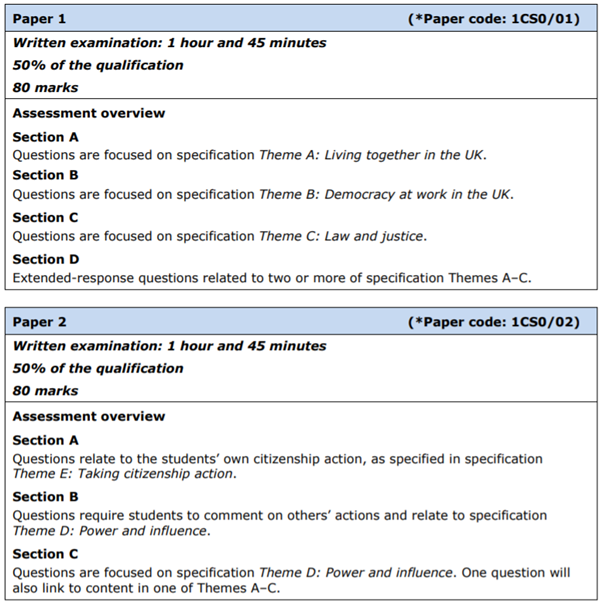
Assessment in GCSE Citizenship
Students will sit two exam papers in the summer of Year 11. Details for each exam paper can be found below. GCSE Citizenship qualification will be awarded by the Edexcel.
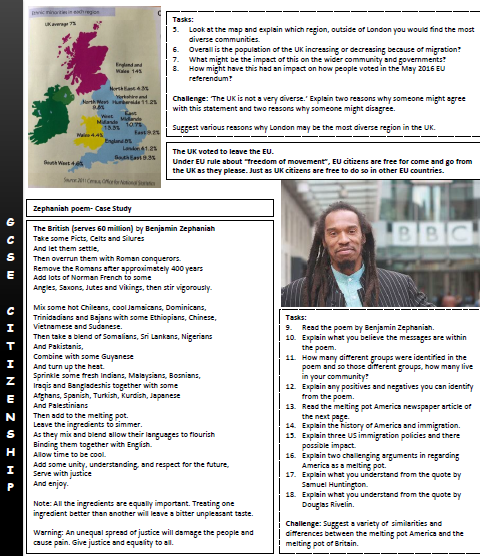
Example of Citizen Booklet
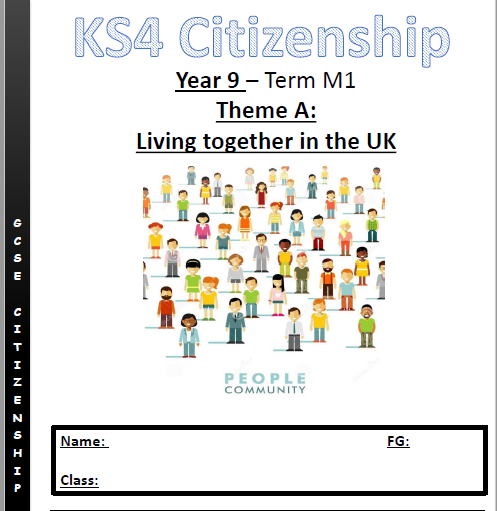
Example of a Citizenship booklet